
What Sustainability Needs to Ask
When we invite imagination into the room, something shifts.
People stop performing expertise and start wondering. They get curious, playful—and playfulness, it turns out, is one of the most underrated tools in the sustainability toolkit, because closed minds don’t innovate. This is the space I try to create in my work—where imagination opens the door to different ways of thinking, relating, and leading. The Global Sustainable Island Summit was a unique opportunity for me to do just that by presenting through live painting and conversation.
Art invites people into this shift, into curiosity and playfulness. As I painted species from restorative ocean farms around the world, I chatted with many attendees. Our conversations weaved through the connections between our work, values, and passions.
Looking at all the flags moving across the Opening Ceremony slide, I realised something about this summit that makes it unique: people came from all over the world, from different ecosystems, cultures, histories, and economic realities—but with the shared understanding of what it means to be an islander.
And I think that’s why even brief chats were invigorating. With the common ground established, it was clear that we are all on the same planet and can unite--not despite our differences, but because of them—by celebrating our differences because that’s what makes humanity so vibrant and life so full, and because being inclusive of all voices only increases our capacity to collaborate and find meaningful solutions.
The sustainability movement is missing a critical perspective that excited many of my conversation companions: the mindset shift from do less harm to build something beautiful.
This shift requires accepting that humans are not, and cannot, be separated from the environment in which we live, and that’s ok—all species impact their ecosystem, and we can choose to be keystone species: a positive force in the ecosystem.
Restorative Ocean Communities do this when they meet their needs by asking, “What does the ocean want us to grow?”
“Oh my god, we need that,” said one attendee. “And it works in any ecosystem!”
“Yes, it does!” We smiled at each other.
By the end of the Summit, I’d finished two live paintings: Cold Tending and Tropical Tending. Each one depicts species from real projects around the world that are already generating measurable ecological and social impact. For example, a pearl oyster ocean farm in Fiji has improved the water quality of the bay while providing women with economic opportunities. The ripple effect is that fathers now have more time with their kids because they are not the sole earner.
I wonder how many more benefits we’ll uncover with similar solutions.
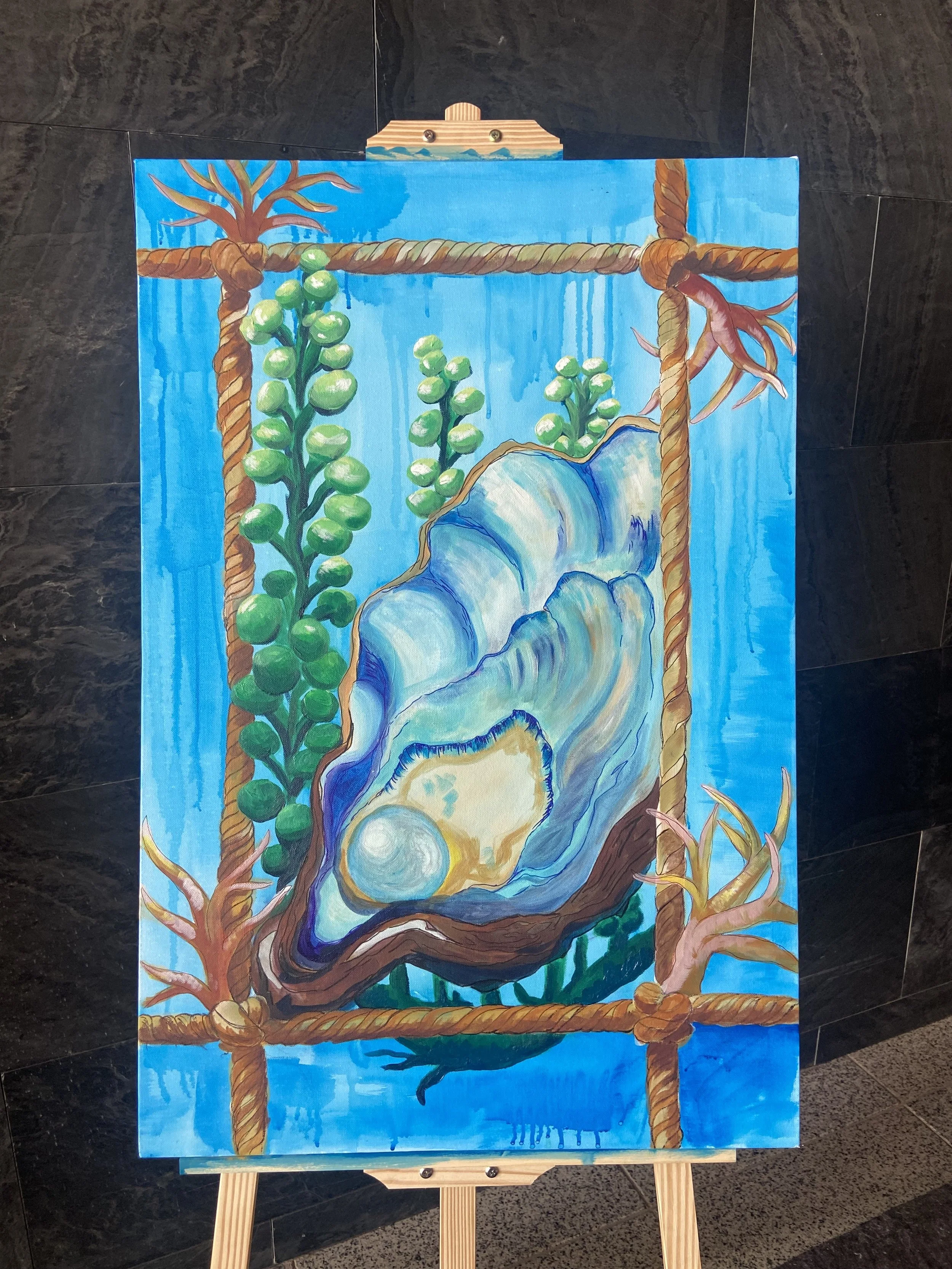
Tropical Tending
A pearl oyster, Sea grapes (aka green caviar), and coral for out-planting.
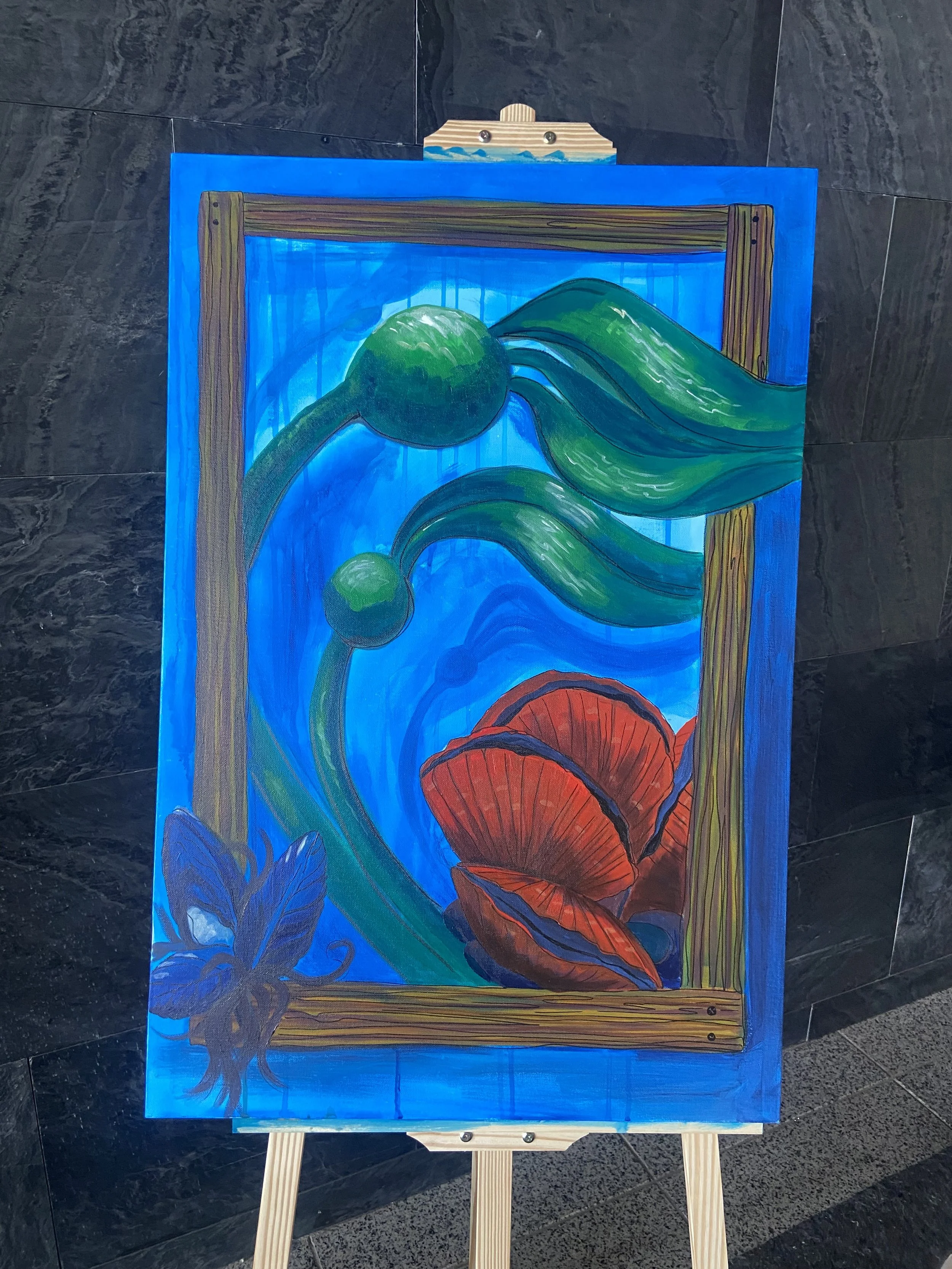
Cold Tending
Queenie scallops, mussels, and oxtail kelp (aka bull kelp).
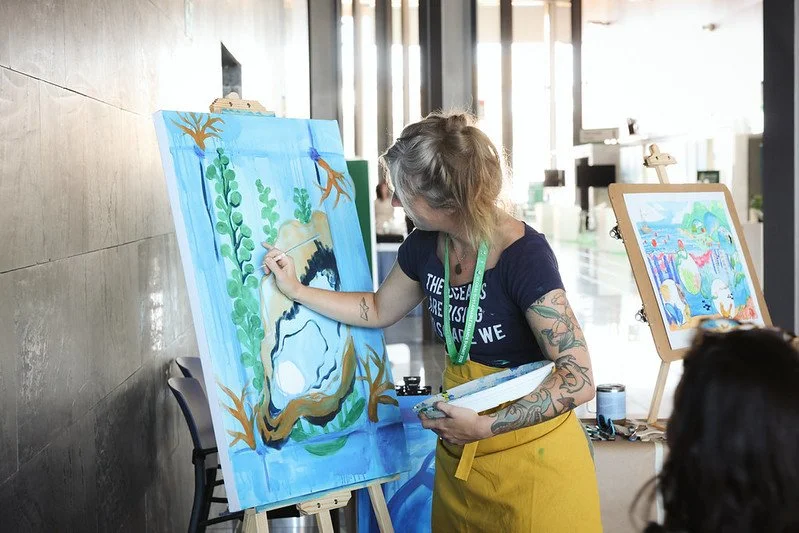
Art in progress. Infograph of a restorative ocean community in the background.